
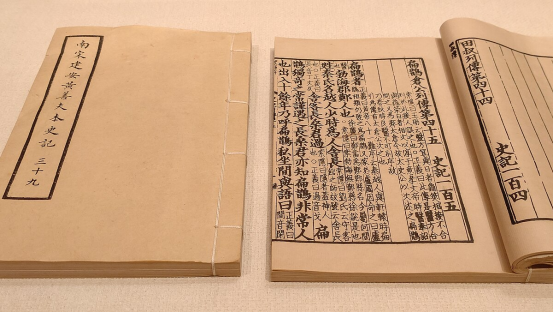
“Records of the Grand Historian” is the pioneering work of Chinese historiography and an indelible monument in the history of literature and thought. It is not only a monumental record of history but also an epic depiction of human nature. Sima Qian, with his pen as a sword, used words to pierce time, depicting the “heroes” that have etched themselves in people’s hearts for millennia. These heroes, loyal or rebellious, wise or foolish, tragic or heroic, all shimmer with the brilliance of humanity in the long river of history. “Records of the Grand Historian” transforms history into a narrative of life, full of flesh and blood, tears and dreams. It symbolizes the spirit of ancient Chinese historians and is the earliest example of human-centered historical writing in world literature.
1. The Historian’s Final Song: Sima Qian’s Spirit and the Significance of the Records of the Grand Historian
“A swan song of historians, a rhymeless Li Sao”—this is Lu Xun’s assessment of the “Records of the Grand Historian.” This reveals that this masterpiece possesses both historical truth and poetic emotion. The “Records of the Grand Historian” is more than just history; it is a story of self-redemption about destiny and dignity.
Sima Qian lived during the reign of Emperor Wu of Han, an era of political repression and ideological control. He inherited his father’s ambition, determined to write a historical masterpiece that “explored the relationship between heaven and man, understood the changes of the past and present, and formed his own unique opinion.” However, fate brought him the most severe blow of his life: castration for defending Li Ling. For a scholar, this was a double blow to his body and dignity. But Sima Qian did not sink into despair. He wrote books out of anger, transforming his personal pain into spiritual strength. The Records of the Grand Historian thus became his struggle against fate and his response to the meaning of life.
This spirit of redeeming oneself through writing and taking history as its soul elevates “Records of the Grand Historian” beyond the realm of historical texts. It is more than a chronicle, but a profound reflection on history and human nature. Sima Qian, with his independent historical perspective, dared to honestly expose the mistakes of emperors, reveal the human heartbreak, and understand the hearts of rebels. He wrote with a calm pen about the absurdities of politics and with passionate emotion about the brilliance of human nature. This fusion of rationality and passion has made “Records of the Grand Historian” a model for both historiography and literature for generations to come.
II. Heroic Portraits: The Glory of Humanity in Blood and Fire
“Records of the Grand Historian” portrays hundreds of historical figures, who together form a magnificent heroic canvas. Sima Qian not only records history but also depicts the soul. His writings do not feature purely “good” or “bad” characters, but rather “people” rife with contradictions and conflicts.
In “The Records of Xiang Yu,” Xiang Yu is portrayed as a profoundly tragic hero. He possessed immense strength and unparalleled courage, yet ultimately committed suicide by slashing his throat at the Wujiang River, ending his eventful life. Sima Qian doesn’t portray him as a mere failure, but instead imbues him with a sense of tragic grandeur that transcends success and failure. His spirit of “living as a hero, dying as a ghost hero” has become a timeless symbol of the hero in Chinese culture.
In “The Records of Emperor Gaozu,” however, Liu Bang’s portrayal is complex and vivid. He rose from humble origins, yet conquered the world with wit and practical political skill. Sima Qian doesn’t glorify him, but instead reveals the multifaceted nature of a political figure through layers of detail: cunning yet benevolent, ruthless yet true. This writing style allows the historical figure to step down from the altar and return to the human realm.
Furthermore, “Records of the Grand Historian” also leaves shining chapters for many “non-mainstream” figures. The assassin Jing Ke, the righteous man Nie Zheng, the wise man Zhang Liang, the knight-errant Guo Jie… Some achieved fame through death, some passed down through wisdom, and some moved people through their emotions. Sima Qian depicts them with equal grace, as if to say: History belongs not only to emperors, but also to every person who burns for their ideals.
In the American literary tradition, works like Herman Melville’s Moby-Dick and Steinbeck’s The Grapes of Wrath reveal the spirit of the times through the struggles of ordinary people. Records of the Grand Historian accomplished this feat two thousand years ago—imbuing history with the warmth of life through truth and compassion.
III. The vicissitudes of history: the fate of mankind in the cycle of prosperity and decline
The grand narrative of the Records of the Grand Historian spans three millennia, from the Yellow Emperor to Emperor Wu of Han, showcasing the rise and fall of dynasties and the evolution of civilization. Sima Qian wasn’t content with simply recording events; he was more concerned with the causal relationships and patterns underlying history.
He understood that history is an endless cycle. The shifting of dynasties, the fall of heroes, political corruption, and the suffering of the people recur throughout the “Records of the Grand Historian.” Whether it was the absurdity of King You of Zhou lighting beacons to mock the princes, the tyranny of Qin Shihuang’s book burning and burying scholars, or the fanatical warmongering of Emperor Wu of Han, Sima Qian recorded them all with a cold, unflinching pen. He neither eulogized nor flattered, but spoke with facts, leaving future generations to grapple with the weight of history for themselves.
In his “Autobiography of Sima Qian,” he wrote, “To understand the changes of the past and present, to explore the relationship between Heaven and man.” This suggests that he viewed history as an eternal dialogue between man and fate, between ideals and reality. In the historical perspective of “Records of the Grand Historian,” there is no absolute good or evil, nor eternal power. It teaches us that even emperors decay, heroes fall, but only spirit and morality endure through time.
This idea coincides with the Western concept of historical tragedy. As Tolstoy demonstrated in War and Peace, individuals are both insignificant and momentous within the sweep of history. Sima Qian, two thousand years ago, discerned this tension of fate—using history as a mirror to illuminate humanity’s shared predicament and hope.
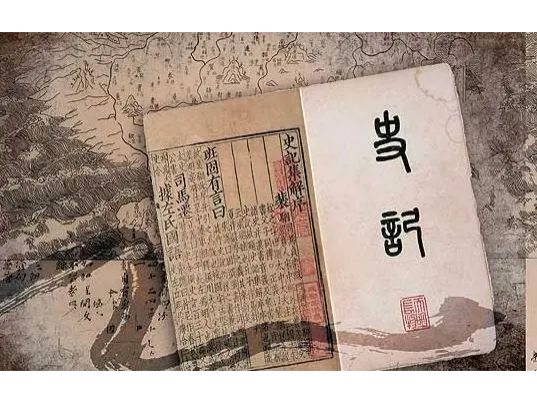
IV. Using History as a Mirror: Humanistic Care and Spiritual Consciousness
The greatness of the Records of the Grand Historian lies not only in its historical value but also in its humanistic spirit. Sima Qian, though a historian, possessed the soul of a poet and the depth of a philosopher. He cared not only about emperors and generals, but also about the fate of ordinary people. In “Biography of Boyi,” he wrote about hermits without regrets; in “Biography of Knights-Errant,” he depicted righteous men who hated evil; in “Biography of Merchants,” he wrote about ordinary people who made fortunes through business. This inclusive historical perspective reveals his universal concern for humanity.
He respected every way of living and understood every choice—this is precisely the humanistic warmth of “Records of the Grand Historian.” It is not simply a history of power, but a history of the human heart. Sima Qian used his own suffering as a guide to understand those marginalized by history. He wrote about Jing Ke’s failed assassination attempt on the King of Qin not to glorify the assassination, but to celebrate the courage of “I will go forward, though thousands of men oppose me.” He wrote about Li Ling’s capture not to argue for loyalty and treachery, but to understand the tragedy behind loyalty.
This profound empathy makes “Records of the Grand Historian” the most modern classical work in Chinese culture. It inspires future generations to confront power with independent thought and understand the world with compassion. As Sima Qian said, “Everyone has to die, but some are heavier than Mount Tai, while others are lighter than a feather.” This statement transcends time and space, becoming the strength that keeps countless people clinging to their beliefs.
5. Conclusion: Looking Back Thousands of Years Later
More than two thousand years later, “Records of the Grand Historian” remains a miracle of world literature. It imbues history with soul, allowing humanity’s destiny to live on through words. Sima Qian, in his own body, bore the memory and conscience of an entire civilization. He wrote this immortal book amidst humiliation, revealing universal truths through personal suffering.
In today’s age of information scramble and fragile memory, “Records of the Grand Historian” continues to remind us that truth and conscience are history’s most precious foundations. It teaches us how to maintain dignity in the face of fate, how to remain sober in the face of power, and how to find enduring meaning in the torrent of time.
“Records of the Grand Historian” is a mirror, reflecting the pride of emperors and the courage of ordinary people; it is also a long, unrhymed poem, chanting the eternal tragedy and hope of mankind. When we open this book again, it is as if we can hear Sima Qian’s heartfelt voice: in the silence of history, there is a man who still writes, a pen still burning.
This is the greatness of “Records of the Grand Historian”: it not only records history, but also fulfills the soul; it not only praises heroes, but also witnesses the glory and vicissitudes of human nature.