
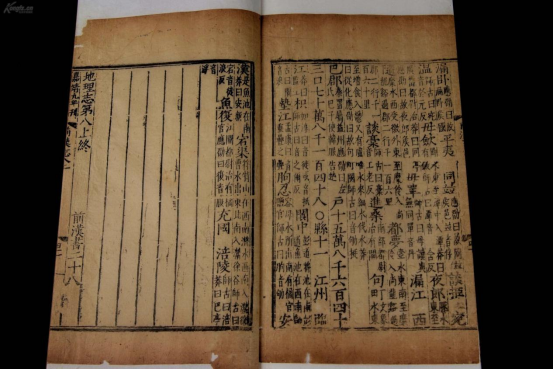
The Book of Han is another monumental work in the development of Chinese historiography. Following the Records of the Grand Historian, it establishes the tradition of compiling dynastic histories in China and is hailed as the foremost of the “Four Ancient Histories.” Author Ban Gu, with his calm and meticulous historical writing, systematically presents the politics, economy, culture, and fate of the Western Han dynasty. In this magnificent historical scroll, we witness the political maneuvers of emperors and generals, as well as the changing times and the imprint of civilization. The Book of Han is not only a crystallization of political wisdom but also a profound work that reflects the human heart and reflects on the relationship between power and history.
1. The Historiographical Status of the Book of Han and Ban Gu’s Spiritual Pursuit
Ban Gu, the author of the “Book of Han,” came from a prominent family in the Eastern Han Dynasty. His father, Ban Biao, had written “Hou Zhuan,” intended as a sequel to the “Records of the Grand Historian.” Following his father’s lead, Ban Gu spent over twenty years completing the 100-chapter “Book of Han,” systematically chronicling the history of the Western Han Dynasty from Emperor Gaozu Liu Bang to Wang Mang’s usurpation of the Han Dynasty. The work’s greatest innovation lies in its establishment of the “chronicle, table, record, and biography” format, initiating the tradition of “chronologically segmenting” Chinese histories. Since then, historians throughout history have used the “Book of Han” as a model, developing clear-cut historiographical systems such as the “Book of the Later Han” and the “Records of the Three Kingdoms.”
Compared to the Records of the Grand Historian, the Book of Han demonstrates a greater degree of the “rigor of a historian” and a greater sense of national significance. Sima Qian, writing history from the perspective of individual conscience, emphasized a “people-centered” approach; Ban Gu, on the other hand, focused more on political structures and institutional change. He prioritized order over emotion, framing the rise and fall of nations, the successes and failures of institutions, and the merits and demerits of individuals within a rational historical framework. This calm and rational approach makes the Book of Han a valuable document for the study of imperial politics and administrative systems.
However, Ban Gu was not an emotionless historian. In his “Han Shu (Book of Han) – Xu Zhuan (Han Shu)” (Xu Zhuan), he wrote: “Recounting past events, I contemplate the future.” These eight words reveal his historical spirit: he wrote about the past not simply to commemorate it, but to warn the future. It is precisely under the guidance of this thought that the “Han Shu” is both a history and a mirror—it allows future generations to reflect on the relationship between power, morality, and the fate of the times through the rise and fall of the Western Han Dynasty.
2. Emperors and Machiavellianism: The Game of Political Wisdom
The most striking chapters in the Book of Han are undoubtedly its depictions of imperial politics and power struggles. From Liu Bang and Empress Lü to Emperor Wu of Han and Wang Mang, Ban Gu’s meticulous historical writing reveals the depths of imperial psychology and the complexity of political maneuvers.
Liu Bang is the most relevant political figure in the “Book of Han.” Born a commoner, he conquered the world with his humble beginnings. His political wisdom lies in “knowing the right people and assigning them to the right positions, combining firmness with flexibility.” The “Records of Emperor Gaozu” describes him as “generous and gracious,” yet also “flexible and adaptable.” He was both courteous to the wise and humble, winning over figures like Han Xin and Zhang Liang, and decisively dealing with dissidents, consolidating the foundation of his dynasty. Through his portrayal of Liu Bang, Ban Gu reveals the dual nature of political power: it requires both benevolence and righteousness, as well as political schemes.
By the time of Emperor Wu of Han, the art of political manipulation had reached its peak. Ban Gu, in his “Chronicle of Emperor Wu,” wrote: “He was fond of displaying power, respected Confucianism, and believed in spirits and gods.” This brilliant and ambitious emperor expanded territory and promoted talented individuals, but his conquests and superstitions also led to the exhaustion of the people and the hardship of the country. Ban Gu’s assessment of Emperor Wu is profoundly complex: while he commended his great achievements, he also cautioned against the expansion of power and the perverseness of ideals. This contradictory approach reflects the profound thought of the “Book of Han”—it is not simply a eulogy or denunciation of the emperor, but rather a historical portrayal of the true nature of power.
Wang Mang’s usurpation of the Han Dynasty serves as a historical cautionary tale in the Book of Han. Ban Gu uses a chilling narrative to depict Wang Mang’s “reform of the system by invoking the past,” cloaking his power in the guise of “benevolent governance” while exercising absolute power. He analyzes Wang Mang’s political failures from an institutional perspective, highlighting the disconnect between ideals and reality and the dangers of power being swallowed up by idealism. Reading the Biography of Wang Mang in the Book of Han, we see not just a usurper, but a tragic figure trapped in an idealistic fantasy, abandoned by his time.
The stories of these emperors remind us that political intrigue isn’t simply a cold art, but rather a product of the interplay between political wisdom and human nature. Through the fates of these historical figures, Ban Gu reveals the eternal laws of politics: when power is unbalanced, disaster will follow; when ideals are divorced from reality, they will ultimately destroy themselves.
III. Mark of the Times: Mirror Images of Institutions, Culture, and Society
Beyond its depictions of political intrigue, the “Book of Han” also offers a sweeping portrait of the culture and society of the Western Han Dynasty. In its “Records” and “Tables,” Ban Gu chronicles the ritual and music system, astronomy and calendar, criminal laws, and economic policies, showcasing the workings of a mature empire. These chapters are not merely historical documents; they also reflect the spirit of the times.
“Shihuo Zhi” (Food and Goods Records) is considered China’s earliest monograph on economics. Ban Gu meticulously documents land systems, tax policies, and price fluctuations, revealing the tension between the state and the people. He argues that economic policies that fail to prioritize the people will inevitably lead to social unrest. This kind of economically rational analysis is rare in ancient historical texts and demonstrates Ban Gu’s profound political insight.
The Yiwenzhi (Yiwenzhi) is China’s first systematic cultural catalog. It not only summarizes academic achievements prior to the Western Han Dynasty but also reveals the evolution of thought and the divergence of schools of thought. The dominance of Confucianism and the dissolution of various schools of thought perfectly reflect the restructuring of Han ideology. Through his classification and commentary of classics, Ban Gu demonstrates how a dynasty established legitimacy through culture and consolidated power through ideology. This interplay between culture and politics is one of the most illuminating sections of the Hanshu.
On a social level, the “Book of Han” also reveals the lives of ordinary people behind the imperial order. In his “Criminal Law,” Ban Gu lamented, “As laws and regulations proliferate, thieves and bandits multiply.” He clearly saw that complex laws could not truly constrain people’s consciences but could instead become a tool for the abuse of power. This critical awareness demonstrates that he was not only a historian but also a thinker with a social conscience.
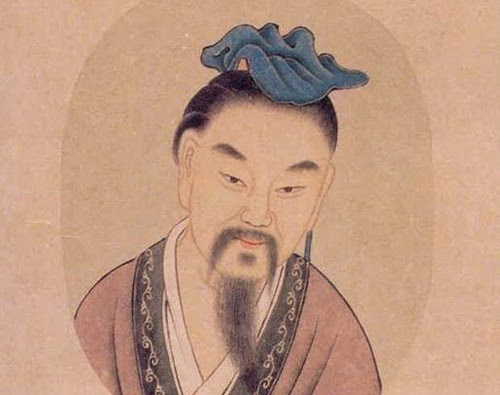
4. The Literary Charm and Humanistic Warmth of the Book of Han
While the “Book of Han” is primarily historical, its literary achievements are equally remarkable. Ban Gu is known for his rigorous prose and meticulous structure, but his narrative and descriptions also imbue him with a rich literary flavor. His language is both solemn and elegant, yet rhythmic; his narratives are both rationally analytical and full of emotional undercurrents.
In “The Biography of Su Wu,” Ban Gu succinctly describes Su Wu as “herding sheep while upholding his loyalty, sleeping in the snow and drinking ice,” showcasing the unwavering and unyielding spirit of the nation. This kind of loyalty, “unwavering in the face of death,” is not only a symbol of political ethics but also a manifestation of personal dignity. Reading this, we can almost feel the chill of the North Sea snow and hear the echoes of this undying loyal soul.
In “The Biography of Jia Yi,” Ban Gu writes with profound emotion about the tragedy of an idealist. Jia Yi, a man of great talent and lofty ambition, was marginalized by politics and ultimately died of depression. Ban Gu doesn’t recount his life indifferently, but instead laments with empathy, “His talent was not appreciated.” This compassion for the fate of the scholar reveals his tenderness and humanistic concern as a historian.
Therefore, the “Book of Han” is not only a “book about emperors” but also a “book about people.” It allows us to see the blood and tears of those behind the system and the machinations—their struggles, their beliefs, their sorrows. It is precisely these details that elevate the “Book of Han” beyond the cold realm of history and become a literary classic imbued with the warmth of life.
V. Conclusion: Using History as a Mirror to Reflect the Times and People’s Hearts
The Book of Han not only records the rise and fall of a dynasty but also reveals the eternal logic of power. It teaches future generations that the political wisdom of any era is inseparable from insight into human nature; the success or failure of any system ultimately depends on morality and conscience.
Ban Gu chronicled the turbulent times with a calm pen, revealing the truth about power with rational prose. He was both a historian and a thinker; he not only recorded the past but also warned the future. The Book of Han shows us that, in the long course of history, political schemes may flourish for a time, but only wisdom and morality endure.
Two thousand years later, when we look back at the Book of Han, we can still discern its profound practical significance. It reminds us that no matter how power shifts, humanity remains the foundation of history; no matter how the times progress, ideals and responsibilities remain the backbone of civilization.
The Book of Han is a mirror, reflecting the glory and decline of emperors, as well as the eternal desires and tragedies of human society. It teaches us that history is not a dusty past, but an eternal inquiry into wisdom, courage, and conviction. Within that inquiry, the immortal words of the historian Ban Gu still resonate: “Learn from history to understand the rise and fall of nations; observe history through the lens of human nature to understand the world.”