
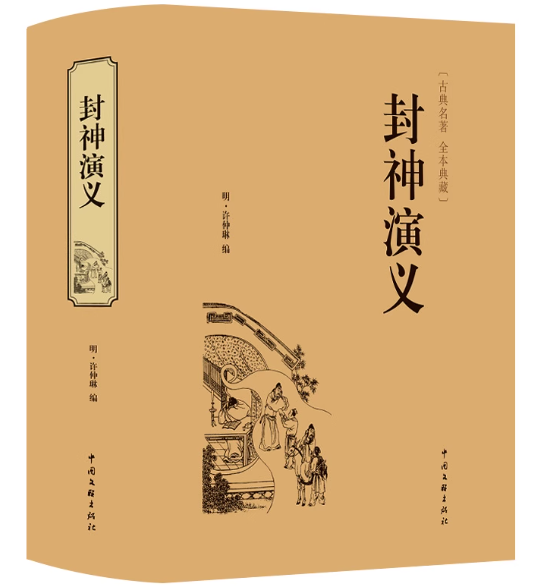
Hey, everyone! Today, I want to share with you a captivating piece of Chinese literature that has fascinated readers for centuries—The Investiture of the Gods. This novel is not just a mythological tale; it’s an epic narrative of good versus evil, destiny, and rebellion, set against the backdrop of the transition from the Shang to the Zhou Dynasty. If you’re interested in a world filled with magic, gods, and heroes, this book is definitely worth your time.
An Epic Tale of Gods and Humans
The story unfolds during the final years of the Shang Dynasty, under the tyrannical rule of King Zhou, who is mesmerized by Daji, a beautiful woman possessed by a fox spirit. Their corruption leads to political decay and widespread suffering. Meanwhile, in the west, King Wen and King Wu of Zhou, aided by the wise Jiang Ziya, rise up to challenge the Shang’s tyranny.
Jiang Ziya, a sage in his seventies, is entrusted with the divine mission of enfeoffing the gods. Armed with a divine whip and riding a mythical beast, he leads a coalition of immortals and mortals in a thrilling battle against the Shang’s forces and their demonic allies. In this war, gods, immortals, demons, and humans intertwine, creating a world rich in fantasy and wisdom.
Nezha, a young hero, is a central figure in the narrative. After being forced to take his own life due to his rebellion against evil, Nezha is reborn from a lotus flower, transformed into a divine child with three heads and eight arms. Armed with magical weapons like the Wind Fire Wheels, the Fire Spear, and the Heaven and Earth Circle, he embodies the power of justice. Each of Nezha’s battles is a rebellion against fate and a declaration of war against evil.
Why It Resonates Across Cultures
The Investiture of the Gods has captivated Western readers because it is not merely a mythological novel but an epic tale of justice and rebellion. It explores universal themes such as the corruption of power, the struggle against destiny, and the cost of justice. These themes transcend cultural boundaries and strike a chord with readers everywhere.
Characters like Daji, with her allure and malevolence, Nezha, with his defiance and growth, and Jiang Ziya, with his wisdom and perseverance, add layers of complexity to the story. Daji is not only the embodiment of a fox spirit but also a symbol of the desire for power. Nezha’s rebellion is not just a personal struggle but a challenge to unjust fate. Jiang Ziya’s mission is not just about enfeoffing gods but about defending justice.
Western readers may draw parallels to epic battles between good and evil in works like The Lord of the Rings or Harry Potter. However, the unique aspect of The Investiture of the Gods lies in its integration of traditional Chinese cosmology and moral philosophy. It is not just a story of battles but a parable of faith and sacrifice.
A Deep Dive into Culture and Philosophy
Beyond its fantasy elements, The Investiture of the Gods is a profound exploration of Chinese culture and philosophy. It delves into the concept of the “Mandate of Heaven,” a divine force that transcends human will, and the ancient wisdom of cause and effect.
The gods and immortals in the story are not omniscient or omnipotent; their actions are also bound by the Mandate of Heaven. This raises thought-provoking questions: Is destiny truly unchangeable? And if destiny can be challenged, where lies the boundary between justice and evil?
Moreover, the novel explores the nature of power. The tyranny of King Zhou and the enchantment of Daji reveal how power can corrupt the soul, while the rebellion of King Wu of Zhou and Jiang Ziya symbolizes the restoration of justice and order. These reflections on power and justice elevate The Investiture of the Gods beyond a mere fantasy novel, making it a philosophical allegory.
The Bottom Line
If you’re looking for a novel that combines epic fantasy with profound cultural insights, The Investiture of the Gods is an unforgettable journey. It transports you to a world of gods, demons, and heroes while challenging you to reflect on the nature of justice, destiny, and power.
This book is not just entertainment; it’s an experience. The defiance of Nezha, the allure of Daji, and the wisdom of Jiang Ziya—each character tells a story of humanity and divinity. It reminds us that even in the darkest of times, justice and hope never fade.