
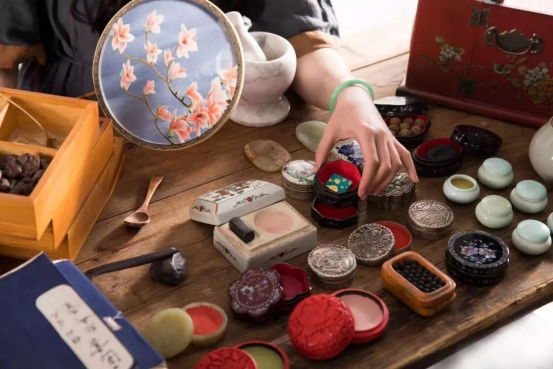
In today’s rapidly developing digital world, our lives are filled with rapidly produced products, and we rarely stop to appreciate the charm of handmade works. However, when we open the pages of classical Chinese literature, we discover a vibrant world: objects are not only necessities of life, but also reflections of thoughts and emotions.
The rouge box in “Dream of the Red Chamber”, the weapons in “Water Margin”, the desk in “The Scholars”, the lacquerware in “Jin Ping Mei”… Each of these objects seems to be whispering the wisdom and philosophy of life of the ancients.
As contemporary handcrafts demonstrate, the ancients’ perspective on creation continues to inspire us to reflect on our daily choices and practices. From tools to materials, from concepts to tactile sensations, every step reshapes the relationship between people and objects. This timeless craftsmanship allows us to redefine the profound meaning of craftsmanship.
Dream of the Red Chamber: The “Order of the Heart” in the Rouge Box
“Dream of the Red Chamber” is a book that best understands “objects.”
Rouge boxes, small mirrors, and sachets—despite appearing to be boudoir items—bear the logic of fate. Daiyu’s rouge box is made of white jade, pure and clean; Baochai’s is made of golden nanmu, calm and dignified. The material, color, and texture all hint at the characters’ personalities and emotions.
This method of conveying emotions through objects is the most tender force of classical narrative.
The rouge box described by Cao Xueqin is more than just a cosmetic container; it serves as a “system of order for the mind.” The rhythm of its opening and closing symbolizes the character’s inner organization and self-discipline.
In modern design, this corresponds precisely to the concept of “emotional interaction”: the interaction between hands and objects can foster emotional expression.
Films and television works that focus solely on appearance while ignoring function and texture struggle to capture this subtle beauty. True craftsmanship lies not in the sheer abundance of decoration, but in allowing the audience to understand the character’s breath and emotions through the details.
Water Margin: The Craftsmanship of Iron and Fire
Unlike the delicate beauty of “Dream of the Red Chamber,” the ingenuity of “Water Margin” lies in its strength and craftsmanship. The weapons of the Liangshan heroes, such as Lin Chong’s Zhangba Snake Spear, Lu Zhishen’s Zen Staff, and Li Kui’s Axe, are each meticulously forged.
Song Dynasty blacksmiths not only had to master the heat but also understand the material structure. Too much heat would make the steel brittle; too little heat would make the blade blunt. Forging wasn’t just physical labor; it was a combination of science and experience.
Modern research reveals that some Song Dynasty forging techniques achieved astonishing levels of material mechanics, demonstrating that ancient artisans mastered the art of balancing “softness within iron.” The fusion of precision and artistry makes each weapon more than just a tool, but an embodiment of strength and beauty.
Jin Ping Mei: The luster of lacquerware and the undercurrent of human heart
The world of Jin Ping Mei is a stage for materialistic desires, where objects mirror the characters’ emotions. Gilded lacquer boxes, incense burners, and gauze curtains all project identity and psychology.
Lacquerware’s smooth, reflective surface is both alluring and fragile, symbolizing the complexities of human nature beneath its surface of desire. Ancient lacquerware adhered to the principle of “nine polishes after ten coats of lacquer,” requiring each layer to dry thoroughly before being polished, much like the unpredictable layers of human emotion.
This subtle connection between objects and psychology is the earliest “consumer aesthetics” of the ancients. It not only allows us to appreciate the exquisite craftsmanship, but also reminds us that true craftsmanship is the respect for emotion, time and details, rather than simply luxurious decoration.
The Scholars: The Philosophy of Order on the Desk
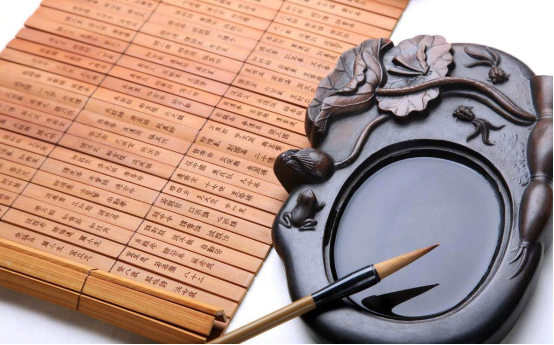
In The Scholars, ingenuity is evident in the design of the four treasures of the study and the desk. The pen holder, inkstone, and paper scroll are arranged in an orderly manner, each object an extension of thought.
Scholars valued order on their desks, reflecting the rhythm of thought and the logic of space. The mortise and tenon structure of a desk requires no nails yet remains as stable as a mountain. This design logic of “replacing attachments with structure” reflects the wisdom of the ancients in their understanding of natural laws and mechanics.
Contemporary research shows that the ancients’ structural logic was more efficient in stress distribution than modern assembly systems . From this perspective, traditional craftsmanship is not merely a manual skill, but the embodiment of scientific thinking and philosophical perspectives.
Objects are the heart: the philosophy of slowness, living in the warmth of hands
Objects in classical literature are never simply functional objects, but rather resonant objects of emotion and thought.
- The rouge box in Dream of the Red Chamber: the storage and reflection of emotions
- Weapons in Water Margin: Symbols of Power and Order
- The Desk in The Scholars: A Carrier of Thought and Order
- The lacquerware in Jin Ping Mei: a mirror image of desire and human heart
Each ingenious object conveys enduring wisdom—the hand is an extension of thought, and the process of making is a process of understanding and practice. Through manual practice, we resonate with objects, thereby gaining a deeper understanding of life and ourselves.
Summarize
The ingenious objects in classic Chinese works are the crystallization of culture and craftsmanship. They demonstrate the wisdom, emotions, and philosophy of the ancients, and also inspire modern people to re-establish their relationship with objects through handmade crafts in their daily lives.
In the future, as our understanding of traditional crafts deepens, perhaps we can apply these concepts to modern design, handicrafts, and everyday life, allowing the ancient ingenuity to continue to shine in new forms.
True craftsmanship never fades; it only lives on through time and the warmth of hands.