
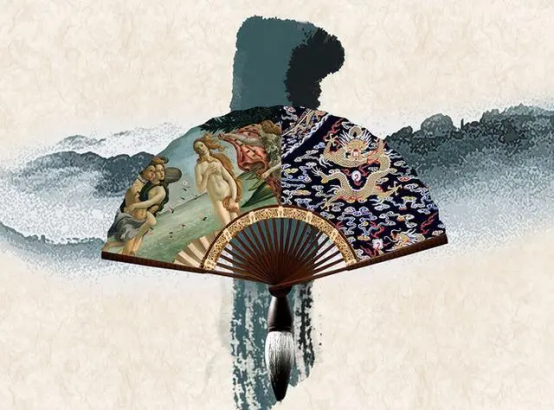
In the wave of global cultural exchange, when we read classic Chinese literary works like *Dream of the Red Chamber*, we are not only touching words from hundreds of years ago, but also approaching a worldview deeply rooted in the East. At the same time, American cultural values in Western society are also exerting a wide-ranging influence globally—from individualism and the ideal of freedom to equal opportunity. To understand this cross-cultural interaction, it is helpful to consult an article on the multifaceted expressions of American cultural values for comparison and understanding.
The core spirit and cultural imagery of classical Chinese literature
Classical Chinese literature, such as *Dream of the Red Chamber*, *Journey to the West*, and *Water Margin*, is rooted in the philosophies of Confucianism, Buddhism, and Taoism.
In *Dream of the Red Chamber*, the emotional entanglements between Jia Baoyu, Lin Daiyu, and Xue Baochai not only showcase individual destinies but also metaphorically represent the rise and fall of dynasties and the sorrows of humanity. Furthermore, through scenes such as the “Land of Illusion” and the “Grand View Garden,” the book profoundly embodies the ideas of “life is like a dream,” “flowers bloom and fade,” and “glory is fleeting.”
Looking at *Journey to the West*, the journey to obtain the scriptures is not only an external journey but also a metaphor for inner cultivation; while the group resistance and social imbalance depicted in *Water Margin* reflect the important dimensions of collective consciousness and ethical cohesion.
From these works, we see a cultural structure of “community thinking” and “community of shared destiny.”
The Formation and Social Projection of American Cultural Values
In contrast, American culture places greater emphasis on “individual freedom,” “self-realization,” and “competition and breakthrough.” Academic research indicates that “individualism” is a core element of American values.
In film, literature, and social practice, this value is reflected in the protagonist’s personal struggles, breaking with tradition, and optimistic expectations for the future.
For example, American films often feature the narrative pattern of “lone hero” and “personal redemption,” reflecting the cultural emphasis on the “self.”
At the same time, American culture also emphasizes equal opportunities, private space, and innovation, which is reflected in its social education, institutional arrangements, and cultural products.
Intellectual Clash and Intertextual Comparison between Chinese and American Cultures
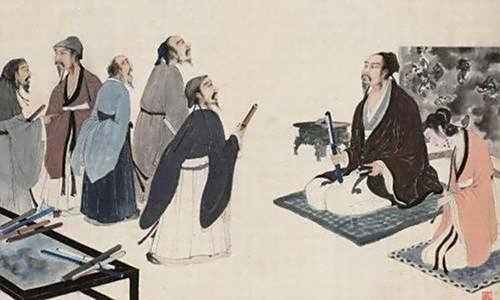
On the important dimensions of “collectivism” and “individualism,” classical Chinese literature and American culture exhibit significant differences. In traditional Chinese literature, the fate of characters is often closely linked to their family and society; while in American cultural narratives, characters are more independent of tradition and pursue their own self-worth.
For example, the rise and fall of the Jia family in “Dream of the Red Chamber” reflects the fate of a family within the social structure, while American cultural works, such as certain inspirational films, emphasize how individuals break free from their environment and achieve self-breakthrough.
This difference is not simply a matter of superiority or inferiority, but rather a narrative logic rooted in different cultures—one emphasizes “we,” while the other emphasizes “I.”
However, with the development of globalization, the two are gradually merging. For example, the Chinese literary spirit’s reflections on “emotion,” “righteousness,” and “fate” are being interpreted by American readers from a new perspective; at the same time, the freedom and innovation in American culture are also providing new opportunities for the dissemination of Chinese literature on the world stage.
From Literature to Cultural Transmission: A New Path for East-West Dialogue
Chinese classical literature has entered the view of American and Western readers through translations, film and television adaptations, and cross-cultural studies. Conversely, many values and concepts of American culture are also being understood and discussed by more Chinese readers through cultural products, the education system, and social media.
In this interaction, literature becomes not only a text, but also a bridge for cultural dialogue. Chinese classics are no longer just historical heritage, but also a path to understanding the world and others; American culture is no longer just an export, but also a window to recognizing “the other” and “differences”.
For example, when an American reader reads the delicate portrayal of family, responsibility, and emotions in Dream of the Red Chamber, they may compare it with the themes of “self-realization” and “free exploration” in American literature, thus generating a new perspective in their thinking.
A clash is not a conflict, but a resonance.
Chinese classical literature and American cultural values, two seemingly parallel cultural threads, have found an interesting convergence in the contemporary era. Literature allows us to perceive culture, and culture, in turn, helps us understand ourselves.
By examining the fatalistic aesthetics of *Dream of the Red Chamber* and the liberalism of American culture, we discover:
- Different cultures express different “value imaginations”.
- The interaction between literature and culture is a way for the human community to think and for individuals to exist.
- Collision is not about separation, but about discovering more possibilities for resonance through comparison and understanding.
When we understand a culture, we may also understand a part of human nature.